Menopause Comfort Kit: Cooling, Comfort & Calm Essentials
By Ally · Editor, Her Wellness Curated · 6 min read
Last updated 27 November 2026
This page contains affiliate links. I may earn a commission at no extra cost to you.
General information, not medical advice. Please talk to your doctor about your own health.
Why I built myself a comfort kit
The first time a wave of heat rose up my chest in the middle of a work meeting, I honestly thought I was coming down with something. My face went red, my back was damp, and I spent the rest of the hour trying to look normal while quietly wanting to peel off every layer I had on. If that sounds familiar, I want you to know you're not being dramatic, and you're certainly not alone.
I'm in my mid-forties and going through perimenopause, and for me the warm spells, the restless nights and the days when I just don't feel like myself come and go. What has helped most isn't one clever product, it's being prepared. So over the past year I've put together a little comfort kit: a few things in my handbag, a few by the bed and a few around the house.
This guide is everything in that kit, why I keep it and how I use it. It's my personal experience rather than medical advice. If symptoms are affecting your days or nights, please talk to your doctor or pharmacist — you deserve proper support, and they can talk you through the options that suit you.
In my handbag: cooling on the go
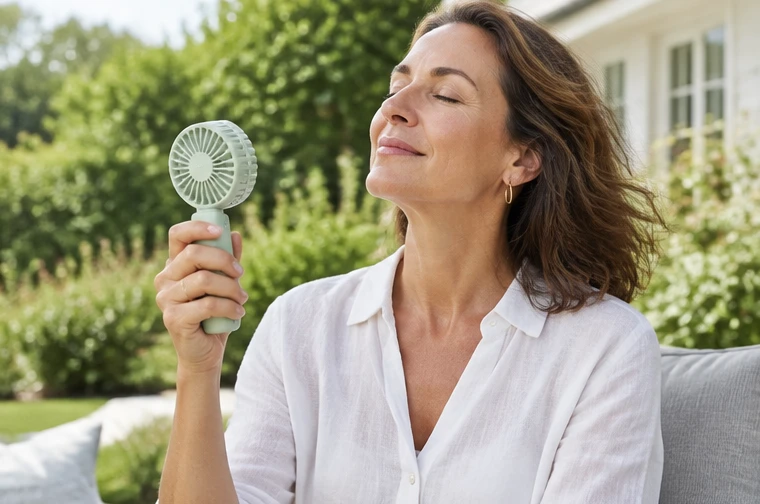
A small rechargeable handheld fan is the single thing I'd never leave the house without now. It lives in the inside pocket of my bag, and a few seconds of airflow on my face and neck makes a warm moment so much easier to sit through, whether I'm on a train, in a queue or in a stuffy restaurant. I charge it every Sunday night with my phone so it's always ready.
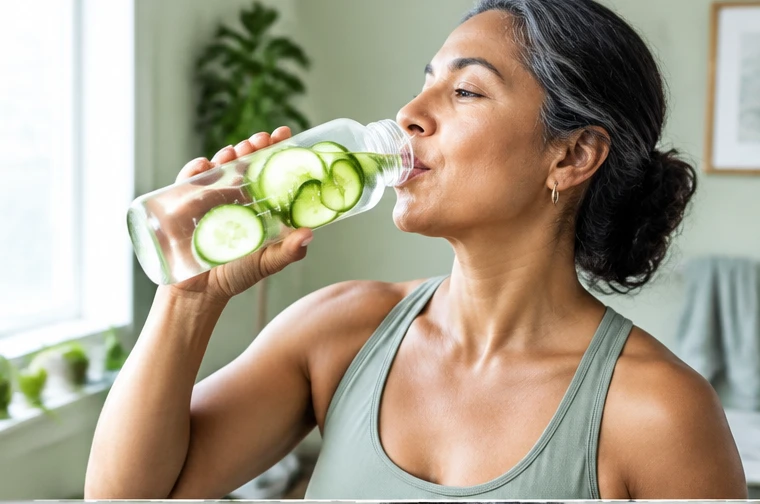
Next to it sits a glass water bottle with time markings down the side. Sipping something cool genuinely helps me feel more comfortable, and the markings are a nudge to actually drink through the day instead of realising at 4pm that I've had nothing but coffee. I add a slice of cucumber or lemon when I want it to feel like a treat.
I also tuck in a small travel pack of tissues or face wipes and a hair clip. Being able to quickly get my hair off my neck is a surprisingly big help. None of it takes up much room, and knowing it's there means I worry less about being caught out.
By the bed: cooler, calmer nights
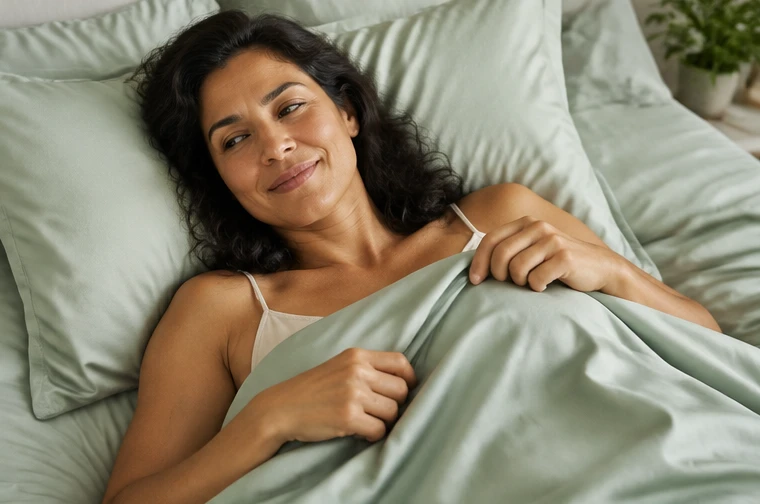
Night-time was the hardest part for me. Waking up warm and tangled in damp cotton sheets, then lying awake once I'd cooled down, was wearing me out. Switching to bamboo cooling sheets was the change I noticed first. They feel cool and silky to the touch and don't cling, so if I do get warm in the night I'm not wrapped in something heavy and clammy.
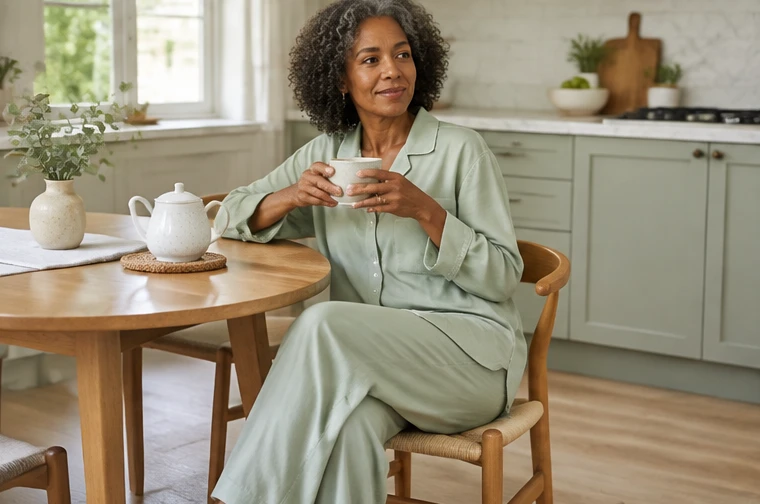
I paired them with a set of moisture-wicking pyjamas. They're soft, light and dry quickly, which means a warm spell doesn't automatically mean getting up to change at 2am. I size up for a looser, airier fit, and I like that they're pretty enough to wear for a slow Sunday coffee too.
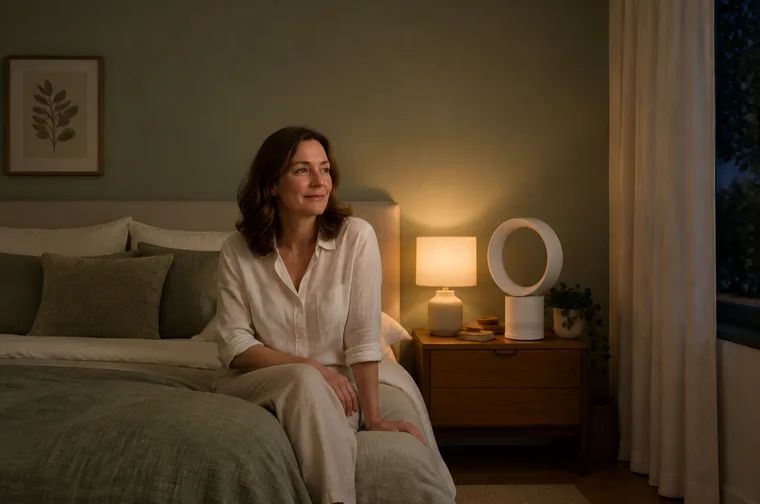
The final piece is a quiet bladeless fan on my bedside table. I set it to a low, gentle oscillation and point it across the bed rather than straight at my face, so the airflow is there without being chilly. It's whisper quiet, which matters because I'm a light sleeper. A cool water bottle on the nightstand rounds it off.
Free gift
Get my Perimenopause Sleep Checklist
Join the list for my free checklist, plus a short weekly note with the wellness finds I'm actually using. No spam, unsubscribe any time.
Around the house: comfort for warm days
At home, I dress in light, breathable layers that I can peel off and put back on as I warm up and cool down. A loose linen shirt over a soft cotton tee is my everyday uniform. It sounds simple, but having the option to adjust in seconds makes me feel far more in control.
I keep my handheld fan on the kitchen bench during the day and move it to my desk when I'm working. On really warm afternoons, I'll step outside for a few minutes of fresh air, sip some cold water and give myself permission to just pause. Those few minutes reset me more than pushing through ever did.
For calm: looking after your mind too
Comfort isn't only about temperature. For me, perimenopause has come with more anxious, wound-up days than I used to have, and the physical discomfort often makes that worse. So part of my kit is about calm: a few slow breaths when I feel a wave coming on, a short walk at lunchtime, and a proper wind-down in the evening.
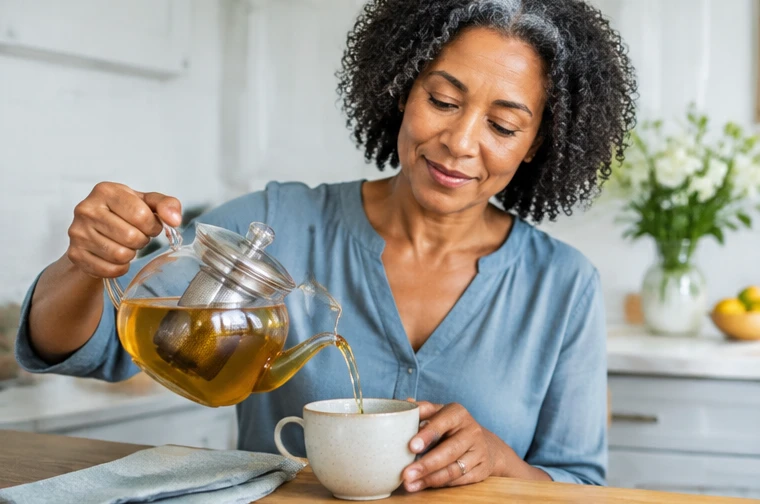
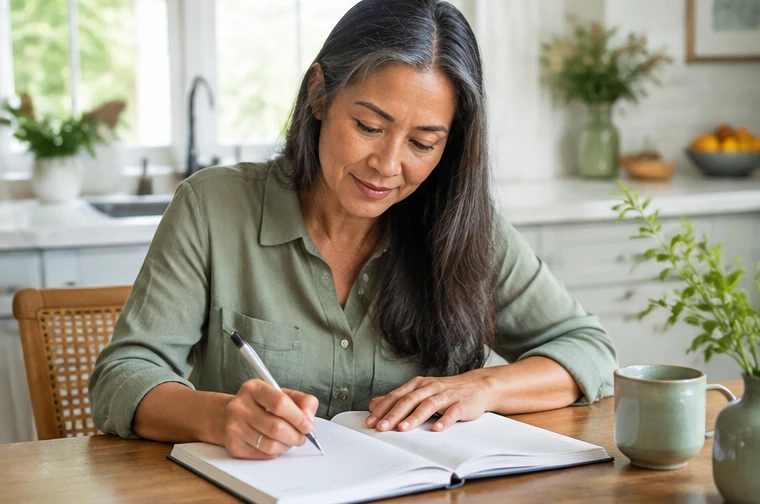
My evening routine is a cup of caffeine-free herbal tea, lamps instead of overhead lights and five minutes writing in a journal. Getting the day's worries out of my head and onto paper helps me feel lighter before bed. If you'd like the full routine, my perimenopause sleep guide walks through it hour by hour.
And please be kind to yourself. If you snap at someone, forget a word mid-sentence or need to leave a room to cool down, that doesn't make you difficult. It makes you a woman going through a big change, and you're allowed to look after yourself while you do it.
How to build your own kit
You don't need everything at once. Start with the moment that bothers you most. If it's warm nights, begin with breathable sheets or pyjamas. If it's being caught out in public, start with a handheld fan and a water bottle. Try one change for a couple of weeks before adding the next, so you can tell what's really helping you.
Keep a simple note on your phone of when you feel warm or unsettled and what was going on: what you ate or drank, how you slept, how stressed you were. Over a few weeks you may spot patterns, and it's useful to take to your doctor too.
Everything I've mentioned is listed below with a link to Amazon, and you can find more comfort finds in my Menopause Comfort collection. Before you start any supplement or new product for symptoms, check with your doctor or pharmacist, especially if you take medication or have a health condition.
You've got this
Comfort looks different for every woman, so take what helps from my kit and leave the rest. I hope it makes your days and nights feel a little easier. — Ally
As an Amazon Associate I earn from qualifying purchases. Personal experience, not medical advice.