Perimenopause Sleep: 10 Amazon Finds That Help Me Sleep Better
By Ally · Editor, Her Wellness Curated · 12 min read
Last updated 27 November 2026
This page contains affiliate links. I may earn a commission at no extra cost to you.
General information, not medical advice. Please talk to your doctor about your own health.
Why sleep changes in our forties
If you used to sleep like a log and now find yourself wide awake at 3am, you're not imagining it. During perimenopause, progesterone — the hormone that has a naturally calming, sleepy effect — starts to fall, and oestrogen swings up and down. Your body's thermostat becomes more sensitive, so small rises in temperature can tip you into a flush or a sweat that wakes you.
Stress plays a part too. Cortisol, our alertness hormone, tends to rise in the early hours, which is why so many of us wake at 3 or 4am with a racing mind, writing tomorrow's to-do list in the dark. Add a busy life, teenagers, ageing parents or work, and it's no wonder we're tired.
I'm in my mid-forties and going through all of this myself. What finally helped wasn't one magic product but a simple, repeatable evening routine that works with my body instead of against it. Below is exactly what I do, hour by hour, and the finds I use at each step.
This is personal experience, not medical advice. If poor sleep is wearing you down, please talk to your doctor — there are treatment options, and you deserve to feel rested.
8:00pm
Dim the lights and start a digital sunset

Bright overhead lights and screens tell your brain it's still daytime, which delays the melatonin that helps you feel sleepy. Around two hours before bed I switch to lamps, turn notifications off and put my phone on charge in the kitchen.
Then I make a pot of caffeine-free herbal tea. Chamomile, lemon balm or rooibos all work. The ritual matters as much as the tea: a few quiet minutes watching it steep is my signal that the day is winding down.
Ally's tips
- I stop caffeine by 2pm — I sleep noticeably better when I do.
- Keep dinner on the lighter side and finish eating two to three hours before bed.
- I go easy on wine — for me it often means a warmer, more restless night.
8:45pm
Cool your body down

A warm shower or bath sounds backwards when you're running hot, but it helps. Warm water draws blood to your skin, and as you step out your core temperature drops — the same drop your body uses as a cue to sleep.
While I shower, the bedroom cools. I aim for around 18°C (65°F), with a quiet bladeless fan by the bed on a low setting. Then I change into moisture-wicking pyjamas that dry fast and don't cling, so a sweat doesn't mean a full change of clothes at midnight.
Ally's tips
- Keep the shower warm, not hot, and finish one to two hours before sleep.
- Choose loose, breathable sleepwear rather than heavy cotton or fleece.
- Point the fan across the bed, not straight at your face, so the airflow is gentle.
9:15pm
Empty your head onto paper

This is the step that changed my 3am wake-ups most. I spend ten minutes doing a 'brain dump' in my journal: everything I need to remember tomorrow, anything worrying me, and three small things that went well today.
Once it's written down, my brain stops rehearsing it in the dark. I follow it with five minutes of gentle floor stretches on a cushioned mat — child's pose, a supine twist and legs up the wall — to release my lower back and hips.
Ally's tips
- Write tomorrow's top three tasks, then close the book.
- Try four-seven-eight breathing: in for four, hold for seven, out for eight.
- Keep stretches slow and gentle; this isn't a workout.
Free gift
Get my Perimenopause Sleep Checklist
Join the list for my free checklist, plus a short weekly note with the wellness finds I'm actually using. No spam, unsubscribe any time.
9:45pm
Into a cool, dark, quiet bed

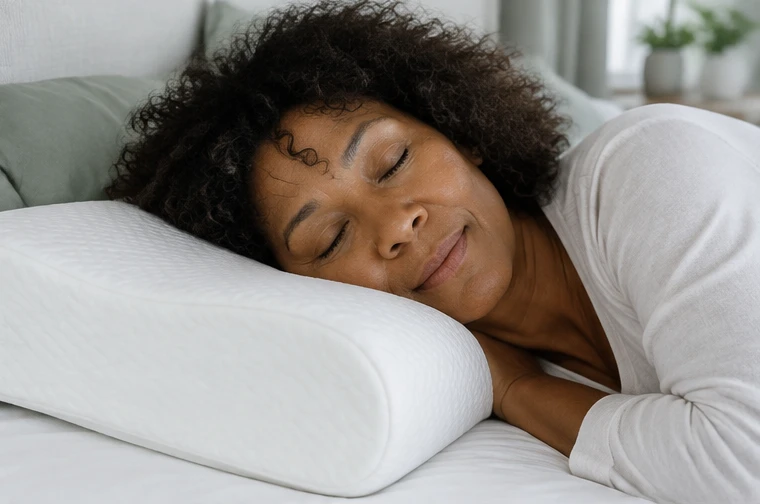
My bed is set up to stay cool all night. Bamboo sheets wick moisture and feel cool to the touch, and a gel memory-foam pillow stops my neck and face overheating. If I'm restless, a breathable weighted blanket helps my mind settle.
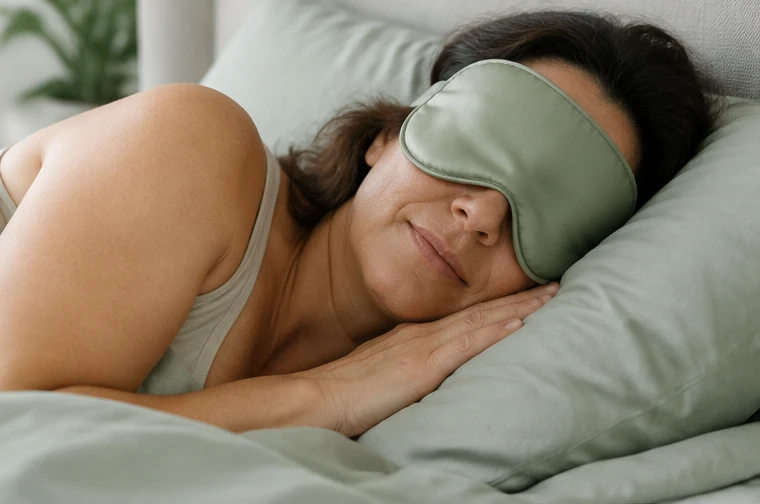
Then I block out the world: a silk sleep mask for early sunrises and a white noise machine to cover a snoring partner, traffic and early birds. Same time every night, even at weekends, so my body learns the rhythm.
Ally's tips
- Brown noise is deeper and often more soothing than white noise.
- Choose a wide silk mask band so it stays put and doesn't tug your hair.
- Try to sleep and wake at the same times seven days a week.
3:00am
Wide awake? My reset routine
It still happens, and that's normal. The trick is not letting a wake-up turn into a two-hour battle. First rule: don't check the time. Working out how many hours you have left only wakes you up more.
I take a sip of cold water from the bottle on my nightstand, flip my pillow to the cool side, kick a leg out of the covers and do a few slow breaths. If I'm still awake after about twenty minutes, I get up, sit somewhere dim with a calm book, and go back to bed when I feel drowsy.
Ally's tips
- Turn your clock to face the wall.
- Keep a glass bottle of water by the bed for night sweats.
- No phone — even a quick scroll can keep you up for an hour.
6:30am
Wake gently and set up tonight's sleep
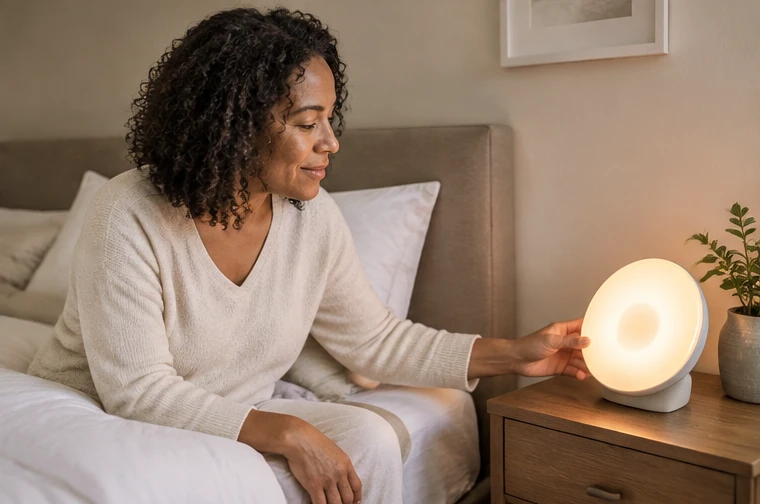
Good sleep starts in the morning. Instead of a jarring alarm, a sunrise clock slowly brightens the room for thirty minutes, so I wake feeling calmer, even in winter.
Within half an hour of waking I get outside for daylight, even just ten minutes in the garden with a coffee. Morning light anchors your body clock, so you feel sleepy at the right time tonight. A walk or a short strength session during the day helps too.
Ally's tips
- Morning daylight is my favourite free sleep habit.
- Move your body most days — it builds healthy tiredness by evening.
- A sleep tracker can show weekly patterns, but don't stress over nightly numbers.
Start small
You don't need to do all of this tonight. Pick one step — a cooler room, a brain dump, or no clock-watching at 3am — and try it for a week before adding another. Small changes, done consistently, add up.
Our health is everything in this season of life. Looking after your sleep isn't an indulgence; it's the foundation for your mood, energy, heart, weight and memory. Be patient and kind with yourself. — Ally
As an Amazon Associate I earn from qualifying purchases. Personal experience, not medical advice.