Strength Training at Home Over 40: Beginner Gear Guide
By Ally · Editor, Her Wellness Curated · 6 min read
Last updated 27 November 2026
This page contains affiliate links. I may earn a commission at no extra cost to you.
General information, not medical advice. Please talk to your doctor about your own health.
Why I started lifting in my forties
For most of my thirties, exercise meant walking the dog and the occasional burst of enthusiasm for a class I'd quit after three weeks. Then in my early forties, things shifted. The same walks and the same meals didn't leave me feeling the same, my middle softened, my knees started complaining on the stairs and I felt less steady and less like myself.
I'm in my mid-forties now, going through perimenopause and working on toning up — not to shrink, but to feel strong and capable in my own body. Strength training at home has been the biggest change I've made. I feel more confident carrying the shopping, getting up off the floor and just moving through my day.
This guide covers the beginner gear I actually use, how I started without a gym, and the simple routine I keep. It's my own experience, not medical or fitness advice. If you have a health condition, an injury or you're new to exercise, please check with your doctor or a qualified trainer before you begin.
You don't need a gym (or much space)
One of the biggest myths that kept me from starting was the idea that I needed a gym membership, a personal trainer and a spare room full of equipment. I didn't. My whole setup fits in a basket in the corner of the lounge room, and I train in a space about the size of a yoga mat.
Training at home also takes away the excuses. There's no drive, no changing room and nobody watching. I can do fifteen minutes while the kettle boils for dinner, in whatever I'm wearing. For me, that convenience has been the difference between doing it occasionally and doing it consistently.
The beginner gear I use
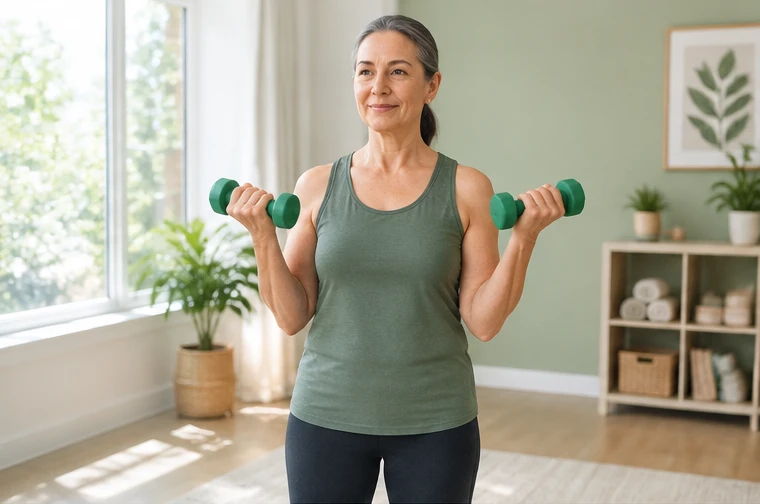
Neoprene dumbbells were my first buy. The coating is grippy and kind on the hands, they don't clatter on the floor and they come in pretty colours, which sounds silly but made me want to use them. I started with a 2–3kg pair and added a heavier pair after a couple of months once the lighter ones felt easy.
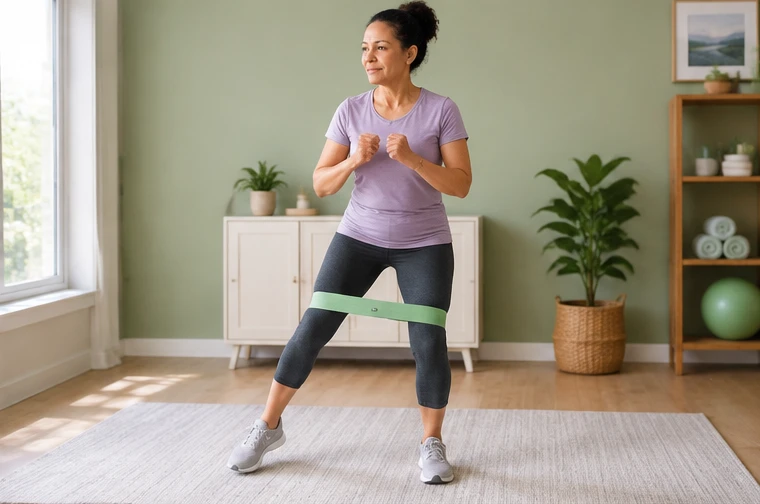
Fabric resistance bands came next. These loops go around your thighs or ankles for glute bridges, side steps and clamshells, and they're brilliant for the hips and backside. Fabric bands don't roll up or pinch like the thin rubber ones, and they fold flat, so I pack them when I travel too.
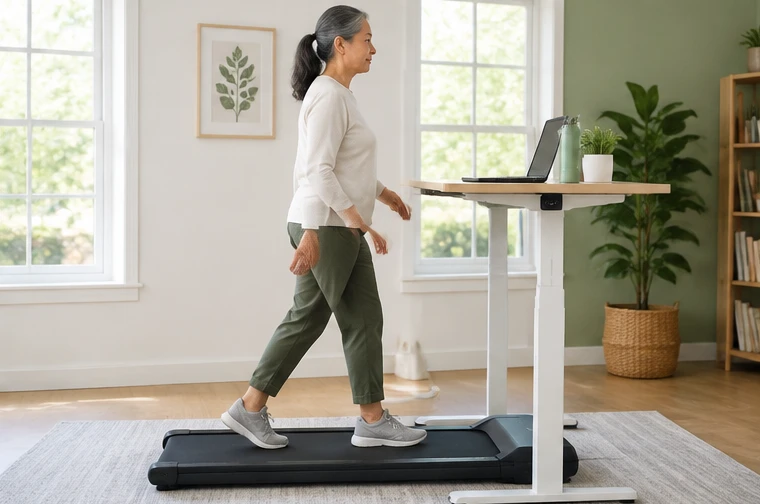
An extra-thick yoga mat is the piece I'd tell any beginner not to skip. At 6mm or thicker, it cushions knees and wrists for floor exercises and stretching, and having a dedicated spot makes it feel like a proper session. Finally, on rainy days or busy weeks, an under-desk walking pad keeps me moving while I take calls or watch TV.
Free gift
Get my Perimenopause Sleep Checklist
Join the list for my free checklist, plus a short weekly note with the wellness finds I'm actually using. No spam, unsubscribe any time.
My simple weekly routine
I aim for two or three short strength sessions a week, around twenty to thirty minutes each, with walking on most other days. Each session covers the whole body with a handful of basic moves: squats to a chair, glute bridges with a band, dumbbell rows, a shoulder press, wall or bench push-ups and a short plank.
I do each move for about ten to twelve slow, controlled repetitions, rest for a minute and repeat the circuit two or three times. When the last few reps start to feel easy, I add a little weight or another round. Slow and steady progress has kept me going far longer than any big burst of motivation.
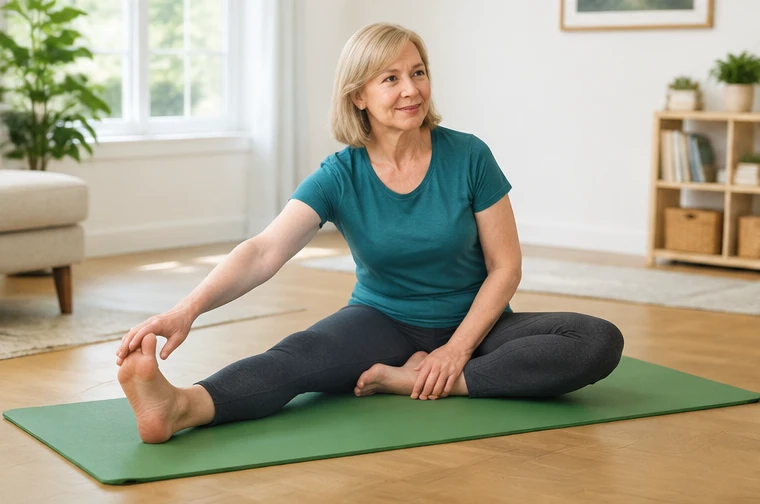
I finish with five minutes of gentle stretching on the mat — child's pose, a hamstring stretch and a hip opener. It's my favourite part, and it helps me feel looser the next day.
Tips that kept me going
Start lighter than you think. Good form matters more than heavy weights, especially as a beginner. If you're not sure, follow a beginner video from a qualified trainer or book one session to check your technique.
Schedule it like an appointment. I put my sessions in my calendar on Monday, Wednesday and Saturday mornings, and I treat them as a meeting with myself. Leaving the dumbbells out where I can see them helps too.
Listen to your body. Some weeks, with poor sleep or a heavy few days, I do a lighter session or just a walk and a stretch, and that's okay. Mild muscle tiredness is normal, but sharp pain isn't, so stop and get advice if something hurts.
Notice the wins that aren't on the scales: carrying all the shopping in one trip, sleeping a little better after an active day, feeling steadier on the stairs. Those are the changes that have kept me motivated.
Why looking after your health matters
Our forties can be a time when everyone else's needs come first. But taking twenty minutes a few times a week to feel stronger isn't selfish. It's an investment in the woman you'll be in ten and twenty years' time, and in being able to keep doing the things you love.
Every piece of gear I've mentioned is listed below with a link to Amazon, and there are more finds in my Strength & Movement collection. Start with one or two pieces, be consistent and be proud of yourself for beginning.
Start where you are
You don't need to be fit to start; you start to get fit. Pick up a light pair of weights this week and see how you feel. I'm cheering you on. — Ally
As an Amazon Associate I earn from qualifying purchases. Personal experience, not medical advice.